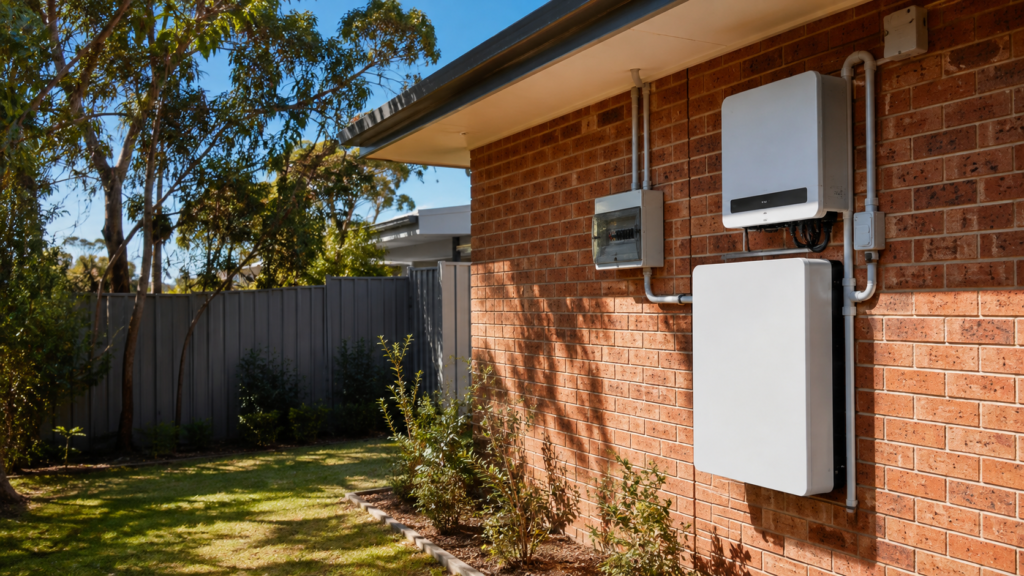
A home battery is not a household item you can put out with the bins, drop at a supermarket collection point, or leave for a council clean-up. It’s a Class 9 dangerous good, and in Sydney the practical options are narrower than most people expect.
Here’s what applies, what doesn’t, and what to do with a retired battery in Sydney.
Why a home battery can’t go out with the household waste
Three reasons.
Fire risk. Damaged lithium cells can enter thermal runaway — a self-sustaining reaction that is difficult to extinguish and burns extremely hot. The NSW EPA has pointed to a steep rise in battery-related fire incidents in the state, including fires in waste collection vehicles and processing facilities where batteries have been placed in kerbside bins. This is the single biggest reason kerbside disposal isn’t available for any lithium battery, let alone a wall-mounted energy storage system.
Dangerous goods classification. Lithium batteries are Class 9 dangerous goods. Transporting them on NSW roads sits under the Australian Dangerous Goods (ADG) Code, which sets requirements for packaging, labelling, segregation, documentation and vehicle handling. A domestic vehicle and a general waste truck don’t meet those requirements.
Waste regulation. Waste lithium batteries fall under NSW EPA waste requirements. Handling, storage and transport carry obligations that a household disposal arrangement can’t satisfy.
What’s changing in NSW
Worth knowing if you’re making a decision now.
NSW passed the Product Lifecycle Responsibility Act 2025, and the accompanying Product Lifecycle Responsibility Regulation 2026 takes effect on 1 October 2026. It establishes Australia’s first mandatory product stewardship scheme for batteries, replacing a voluntary industry-led model with a regulated one backed by significant penalties.
The obligations fall on brand owners — the businesses that supply batteries into NSW — rather than on households. It doesn’t change what you personally need to do with a retired battery today. But it signals the direction clearly: end-of-life battery handling in NSW is moving from best-effort to documented and accountable, and businesses decommissioning battery assets should expect the evidentiary bar to rise.
Option 1: Back to the installer or retailer
If your battery is being replaced under warranty, or your installer is supplying and fitting the replacement, ask whether they take the old unit. Many will as part of the job.
Worth asking a follow-up: what do they do with it? Some installers have a proper end-of-life arrangement. Others accumulate retired units in a yard or storage unit while they work out what to do next. If the answer is vague, the battery may sit in a shed for a year — which is a fire risk, not a disposal outcome.
Option 2: Battery drop-off points
Sydney has a good network of accredited battery drop-off points at supermarkets, hardware stores and council facilities. These are extremely useful — for AA, AAA, button cells, power tool packs and similar loose handheld batteries.
They are not set up for home energy storage systems. The national B-cycle scheme’s current scope covers loose handheld batteries, and residential and grid-scale battery energy storage systems and EV batteries sit outside it, precisely because de-installation, handling and transport require a different approach. Council resource recovery centres generally follow the same line.
Practically: don’t drive a wall-mounted battery to a supermarket collection bin. It won’t be accepted, and moving it in a passenger vehicle isn’t compliant transport.
Option 3: Specialist collection and recovery
For a residential battery, commercial ESS or EV pack, this is the route that exists for the purpose: a specialist collects the battery from your site with trained handlers, transports it under ADG-compliant conditions, and processes it through a documented end-of-life pathway.
This is what we do. We collect LFP (LiFePO₄) and NMC batteries from the Sydney CBD, dismantle them under controlled conditions, test every cell individually, recover cells that meet our standards for a second life, and route the rest to approved recycling partners under a documented chain of custody.
You get a real answer about where your battery went — not a receipt for a skip.
Before collection day: a short checklist
- Confirm whether the battery is still installed. If it’s wired into a system, a licensed electrician needs to isolate and de-install it first. Note this on the collection request form.
- Photograph the unit. Front, sides, and the compliance plate or label showing manufacturer, model and capacity. This speeds everything up.
- Record what you can find. Manufacturer, model, capacity in kWh, approximate age, chemistry if it’s stated.
- Note any damage. Swelling, bulging, corrosion, heat marks, warping, unusual smell — all of it. Include photos.
- Check site access. Stairs, narrow side passages, lifts, loading dock restrictions, parking limitations, strata approvals. Sydney terraces, apartment buildings and CBD sites all have access constraints worth flagging in advance.
- Don’t attempt to open the pack. High voltage and stored energy. Leave it sealed.
If your battery is damaged, swollen or fire-affected
Treat it as higher risk and act accordingly.
Keep it isolated from anything combustible, keep it away from living areas and exit paths, don’t charge it, don’t move it unnecessarily, and don’t store it in an enclosed space you use. If there is active smoke, heat or venting, that’s an emergency — call 000.
For a damaged but stable unit, note the condition clearly in your collection request and include photos. We’re set up to handle damaged and thermally unstable packs, but only if we know before we arrive. A surprise on site means the right equipment isn’t there.
The short version
A Sydney home battery is a Class 9 dangerous good. It can’t go in a bin, a skip, or a supermarket battery collection point. The workable options are your installer, if they have a genuine end-of-life arrangement, or a specialist collection service that handles transport compliantly and can document the outcome.
Either way, don’t leave it sitting in the garage.
FAQ
No. Lithium batteries are Class 9 dangerous goods and are a documented cause of fires in waste collection vehicles and processing facilities. Home energy storage batteries are not accepted through kerbside collection anywhere in NSW.
No. Accredited drop-off points are set up for loose handheld batteries such as AA, AAA, button cells and power tool packs. Residential energy storage systems and EV batteries sit outside that scheme's current scope and require specialist collection.
If the battery is still connected to your system, yes — a licensed electrician should isolate and de-install it before collection. Indicate on the collection request form whether the unit is still installed and we'll advise on next steps.
Collection is available from the Sydney CBD. Requests from outer suburbs, the Central Coast, the Illawarra and regional NSW are assessed case by case — submit a request and we'll let you know if we can help.
Collection is quoted case by case based on battery type, condition, weight, location and site access. Submit a collection request with your battery details and we'll come back to you.
LFP (lithium iron phosphate / LiFePO₄) and NMC batteries — residential home batteries, commercial ESS, and EV packs.
Retired battery in Sydney?
Submit a collection request with your battery details and photos. We’ll confirm serviceability, arrange safe collection with trained handlers, and give you a documented outcome.
Sydney CBD collection. Outside the CBD? Submit a request anyway and we’ll let you know if we can help.